What’s a Ten Frame?
(3 minute read)
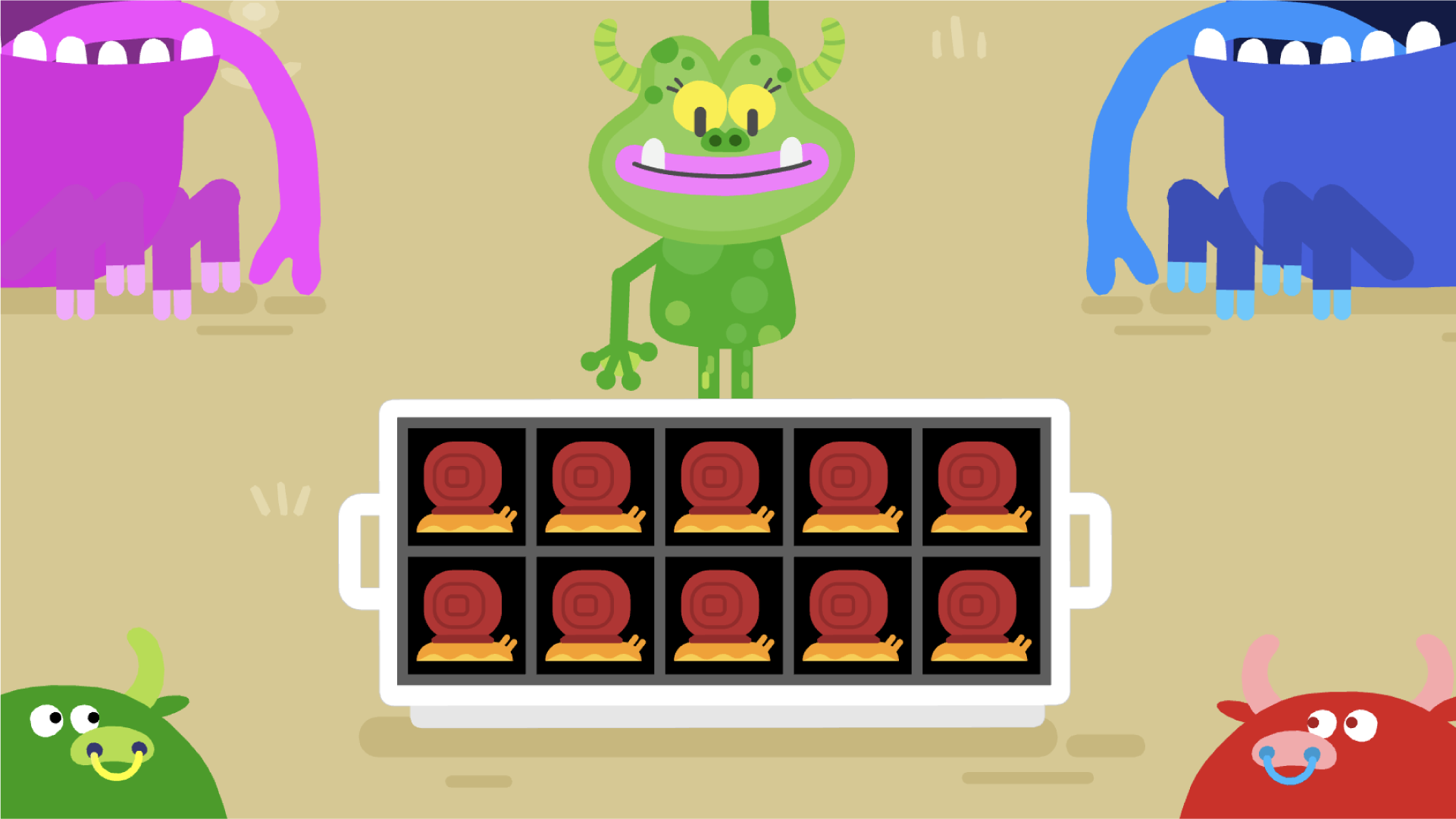
Many useful tools help children build a strong sense of number. One proven, robust tool is the Ten Frame!
A ten frame is a visual learning tool used in early mathematics education to help students understand numbers and basic arithmetic operations. It is a rectangular grid with 10 boxes arranged in two rows of 5, providing a simple, organised way to display quantities… like a box of 10 snails!
How a Ten Frame Works
- Counters like dots, chips, circles (or in the case of Number Skills, numsters, snails and teeth!) are placed in the boxes to represent numbers.
- The frame helps kids visualise quantity and understand how numbers relate to 10.
- It makes it easy to see at a glance how many more objects are needed to make 10.
What is it used for in teaching (and in our game, Number Skills!)
Number recognition
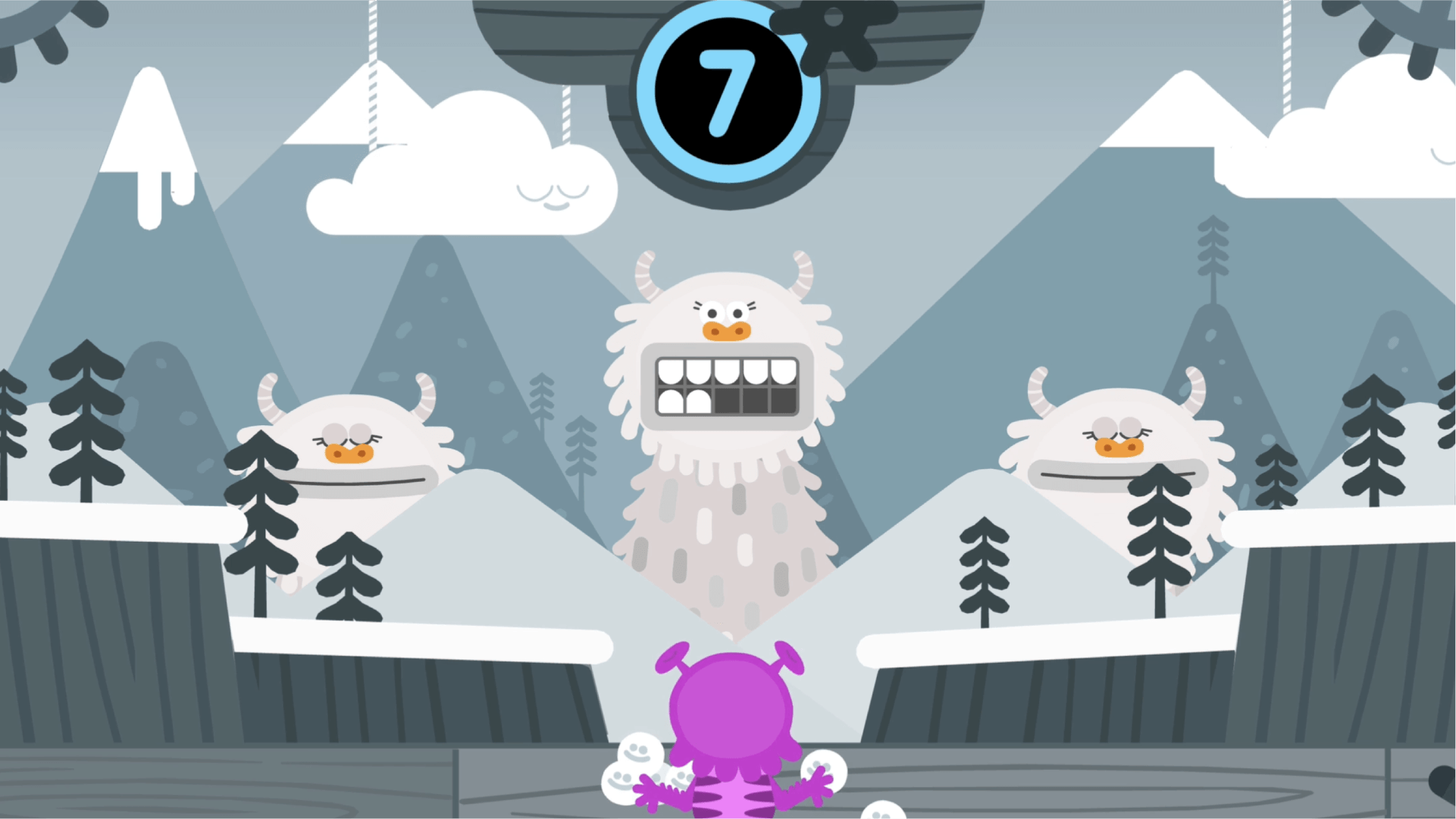
Students see that 7 is represented by 7 filled boxes (usually filling from left to right, top row first). In the snowballs game, we use a yeti’s teeth as a fun adaptation of a ten frame. Children match the number of teeth in the ten frame to the number at the top, then click to throw the snowball, splat!
Subitising
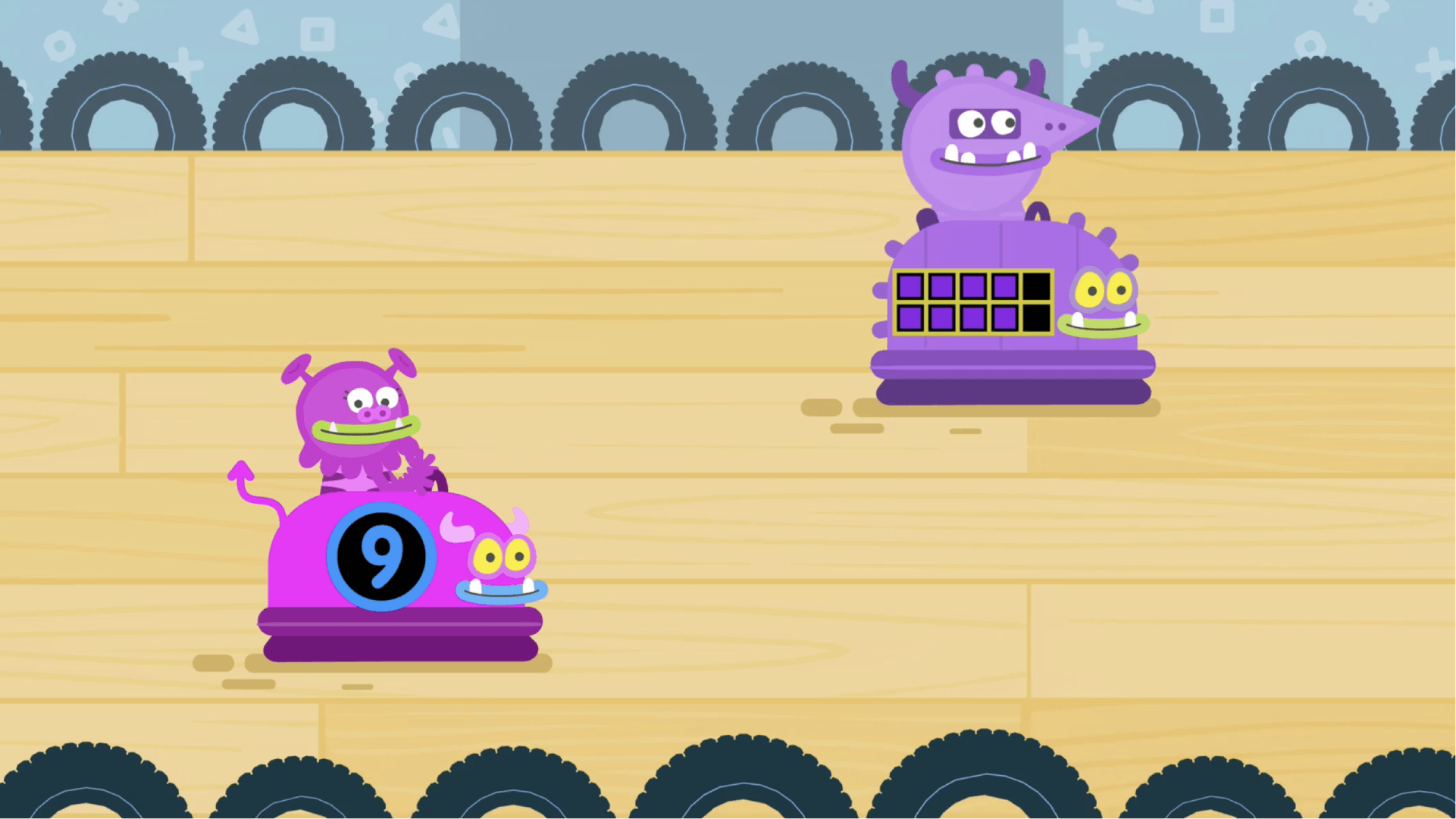
This means ‘recognising quantities without counting’, since the frame’s structure helps kids instantly “see” amounts up to 10. In the speedy ‘bumper cars’ minigame, players must quickly decide if the number on their monster’s car matches the one in front. To do this, they must subitise. Here we can see that the ten frame on the front car shows the number 8, which doesn’t match the numeral on their car, so they must dodge that car! Beep beep!
Addition and subtraction
Students can physically move counters to explore operations (e.g., “Start with 2, add 8, how many do you have?”). In the rollercoaster minigame, we explore addition using the ten frame. The car arrives with a number of numsters already in it, and players must click on the correct conveyor to get to the required number ‘10’. Fortunately, these numsters are also arranged in a ten frame structure, so it will be easier to identify the numsters required: 2 + 8 = 10!

Part-whole relationships
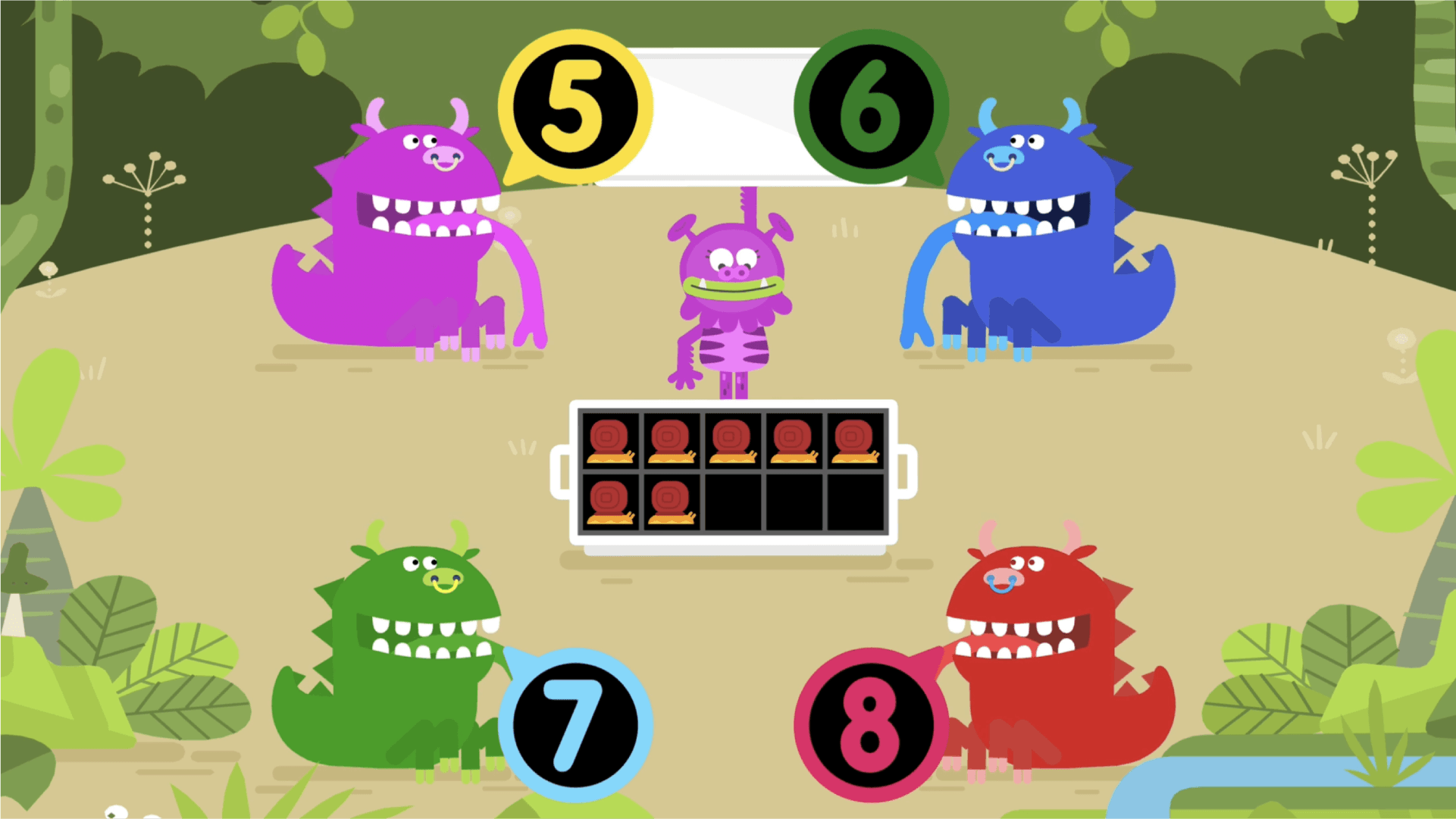
Understanding that numbers can be broken into parts, e.g., 7 = 5 + 2. In our ‘Dinocows’ game, all the dinocows ask for a number. Whether you see 3 snails missing from the ten frame, count 5 on the top row plus 2 on the bottom, or simply subitise and see that the ten frame shows 7, that’s the green dinocows’ lunch!
Building to 10
Reinforcing that 10 is an important number in our number system.
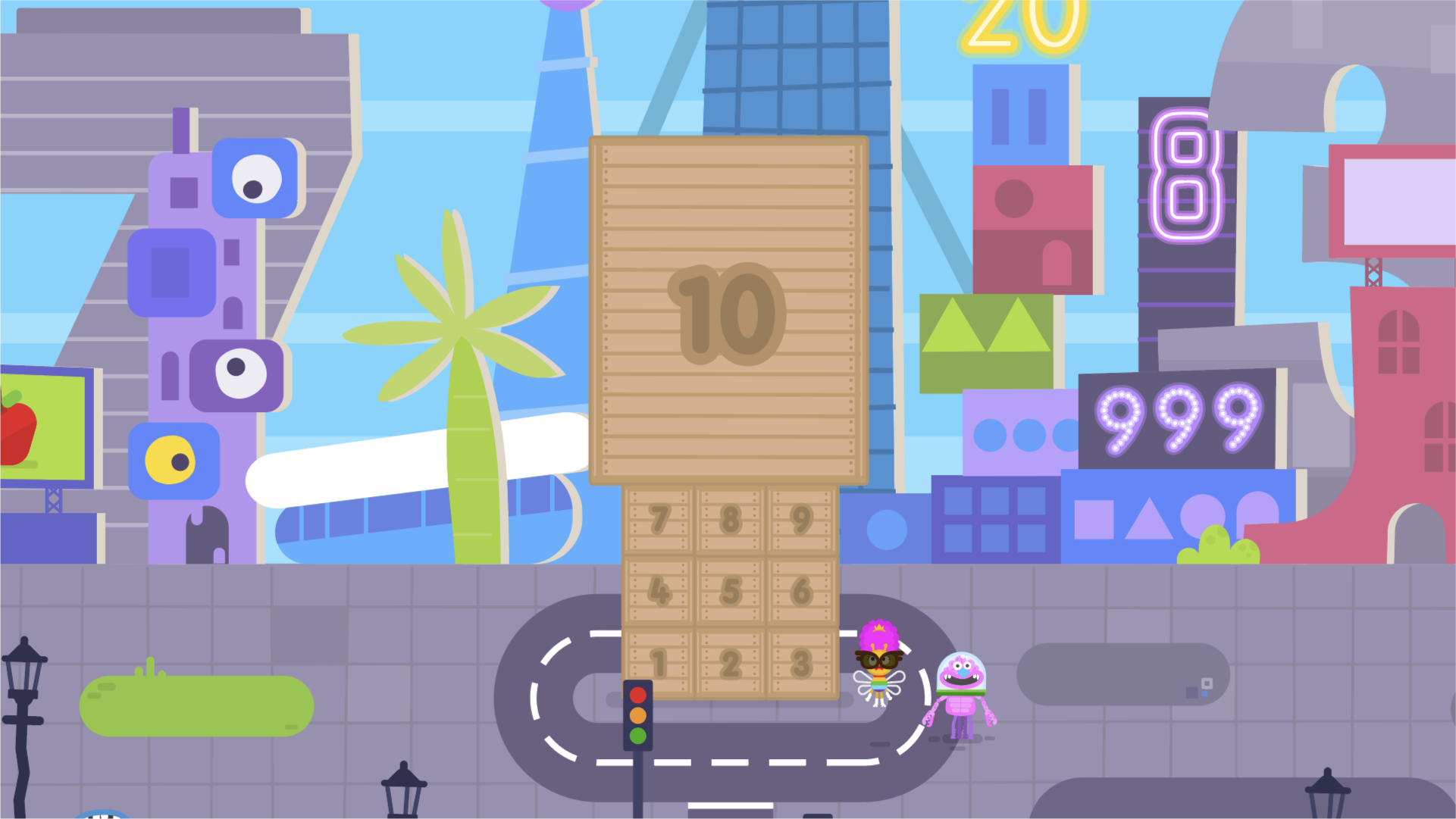
Ten frames are typically introduced in reception/kindergarten or first grade and remain useful throughout early math learning.
The ten frame really helps children with early number skills because:
- It provides consistent structure (always 10 boxes) to reference.
- Learners can use the empty OR filled spaces to see the number.
- Early learners often use objects such as counters (manipulatives) when they start learning numbers (concrete learning). As a highly visual tool, the ten frame supports the transition from concrete objects to abstract number concepts.
- Connects to base-10 understanding (also known as the decimal system), which is foundational for place value understanding.
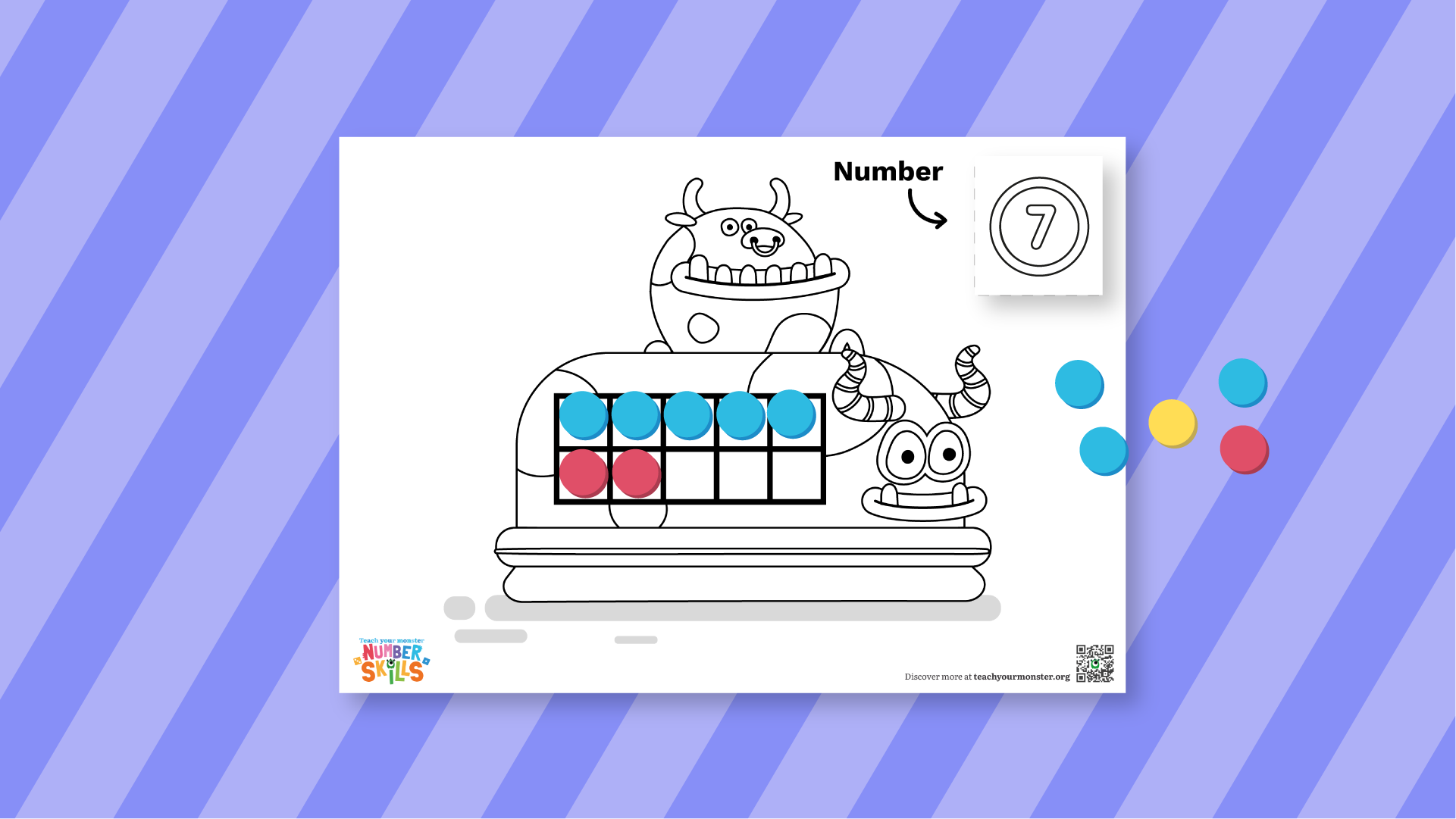
Want a free printable ten frame? Use our Bumper Cars 10 frame to practise forming numbers at home or for a perfect partner activity at school. There are loads of ways you can use it, but here are a couple of suggestions:
- Building numbers
Pick a number from the cards and give your little one counters (or anything else you have around the house!) to create the number inside the 10 frame. - Adding to 10
Set up a number of counters already in the frame, let’s say 2. Ask your child to fill the frame (8) and tell you what number it is. Then repeat the addition sentence ‘2 plus 8 makes 10’. This will strengthen their knowledge of number bonds to 10.
We recommend schools laminate the sheets for reusability!

Leo Allen
Product Lead