
Making Monster Magic! Behind the scenes with Teach Your Monster.
(5 minute read)
We’re crafting something new…
Welcome to Making Monster Magic – the first post of its kind for Teach Your Monster! We are working on a new version of our flagship game, Teach Your Monster to Read — it’s served us and our audience well for the last ten years, but we need to make some changes to make it ready for the next ten! And since this is quite an undertaking, we want to invite you behind the scenes to spotlight the efforts of our team and bring you along for the journey.
We know there will be ups and downs, riddles to solve and monsters to wrangle. We’ll definitely need your help along the way to make this the best game it can be for you, our audience, and to make a real positive impact on our most important users – kids!
Every month, we’ll bring you behind the curtain and show you exactly what we’re working on for the new game. So grab a cup of tea, settle in and read on to see what we’ve been up to.
Introducing…Teach Your Monster to Read?!?!
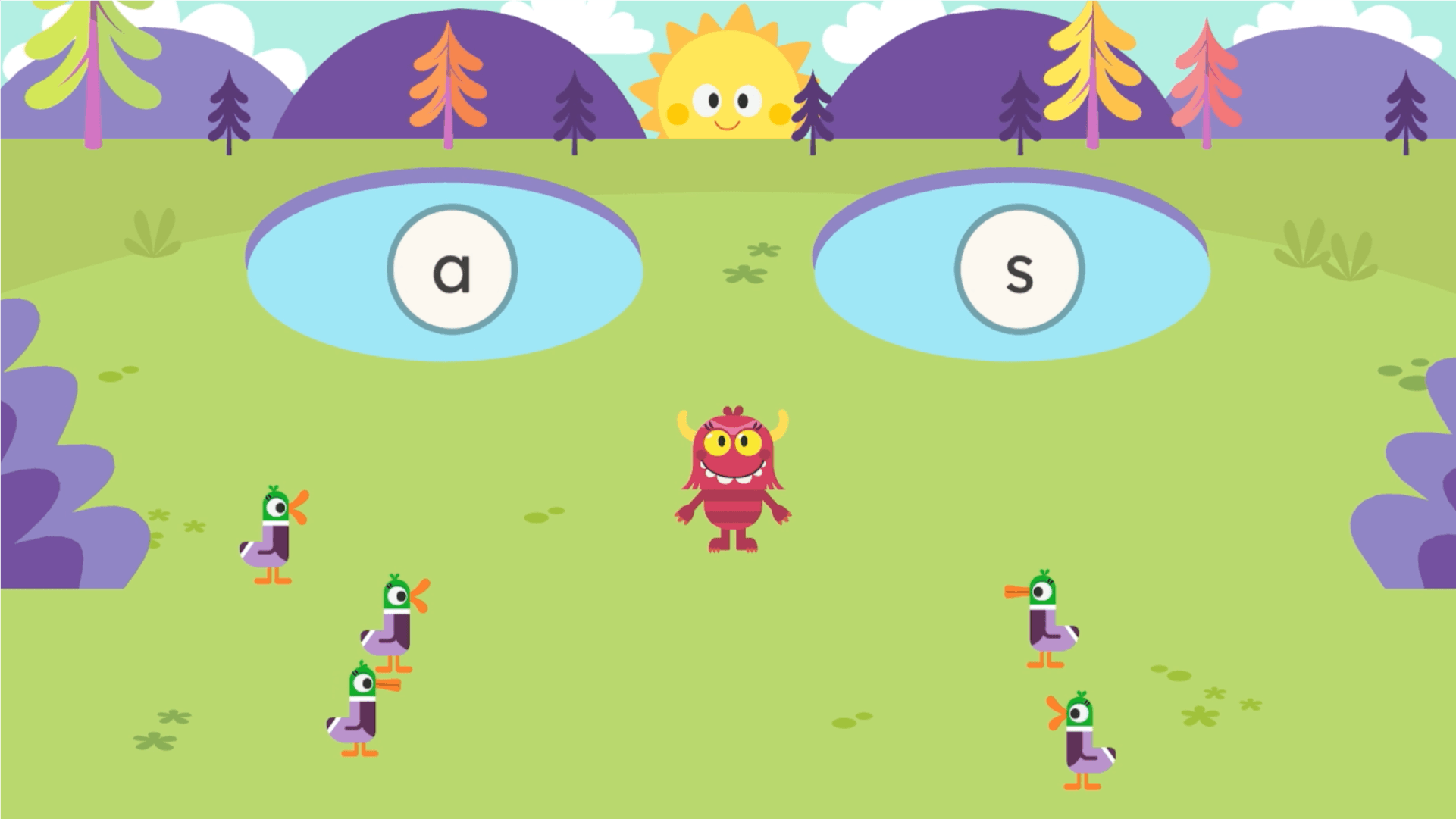
So, as you may have heard, we’re working VERY hard on making a next-generation Teach Your Monster to Read. Don’t worry, we’re keeping a lot of what you love about the game BUT also building on what we’ve learnt over the last ten years to make it ready for the next ten years.
We use feedback from our audience as a key element of our development process, and one key question that always comes up is, ‘how can the game tailor the learning experience to match each child’s individual reading level?’
Adaptive gameplay. Adding powerful, evidence-backed improvements.
From the ground up, we’ve used the latest research from the Science of Reading and the UFLI (University of Florida) foundations toolbox, along with UK research and our own learnings, to inform the structure and content of the game.
One of the key principles from this research is that ‘Instruction should respond to learner performance and pace appropriately’. This means we need to build a game which understands and adapts to player performance; one that understands when the player needs additional practice on a particular letter-sound or skill, and when they have mastered it.
Matt Sayers, one of our developers for the new game, explains that there are two concepts of progress through the game:
- Narrative: the playing of the game – meeting characters, playing mini games, completing tasks, completing adventures.
- Pedagogy: experiencing and ‘mastering’ the things that enable you to learn to read – learning letter-sounds (GPCs – grapheme phoneme correspondences), learning tricky words or heart words, blending/decoding words and comprehension.
💡 GPCs are the relationship between written letters (graphemes) and the sounds they make (phonemes). We often refer to these as ‘letter-sounds’. For example, in the word ‘rain’, there are 3 GPCs: /r/ /ai/ /n/. Recognition of GPCs allows children to start to decode and read words.
In previous versions of the game, narrative and pedagogical progress were the same – completing missions meant that players were moved on to the next letter-sound automatically. This meant that we couldn’t be certain that a letter sound was actually learnt, or simply seen.
“It’s like the difference between watching a video and a game. Assuming that they’ve seen that before, they think that they’ve understood it. But that’s the power of an interactive product, you can show them something, and then you can present ways that they can demonstrate how they do understand it.”
In the new version, these progress pathways have been separated. This means that children can still advance through the narrative, keeping them engaged and having fun, but to move forward pedagogically and encounter new letter-sounds or skills, they will need to meet the mastery conditions.
⚙️ When a player needs more practice at a certain letter-sound, we’re programming the game to keep presenting that sound in different ways until it is ‘mastered’.
“Someone who’s struggling with the pedagogy won’t be stuck, they’ll continue to progress through the narrative at the same pace as someone who’s flying through the pedagogy. So in terms of fun and narrative experience, everyone will get the same joy.”
We’re really excited to be able to create this new version in a way that adapts to a child’s learning and pace, ensuring as much as we can that they are actually learning to read without blocking their momentum or enjoyment of the game.
With loads more to come…
We’re working on so many different aspects of the game currently, but in future posts, we’ll be touching on some of the work that goes into making this game work, including…
- How letter sounds are presented on screen, with accessibility in mind.
- How we encourage self-initiated play through rewards, goals and a sprinkling of magic.
- And of course, how the player does this with their monster!
We want to hear from you!
As we’ll be discussing in future posts, our players and users, kids, parents, and teachers, are fundamental to how we develop and improve our games. We want to hear from you. How do you feel about this update? Any must-haves you believe should be included in the new Teach Your Monster to Read? We’d love to hear your thoughts. Please let us know what you think via this Google form, and we’ll read every response.
Thank you for being part of the journey
More updates soon 💛

Kay Leathers
Designer, Ex-Teacher and Writer for Teach Your Monster