
A little computer-assisted learning a day keeps low math scores away!
(3 minute read)
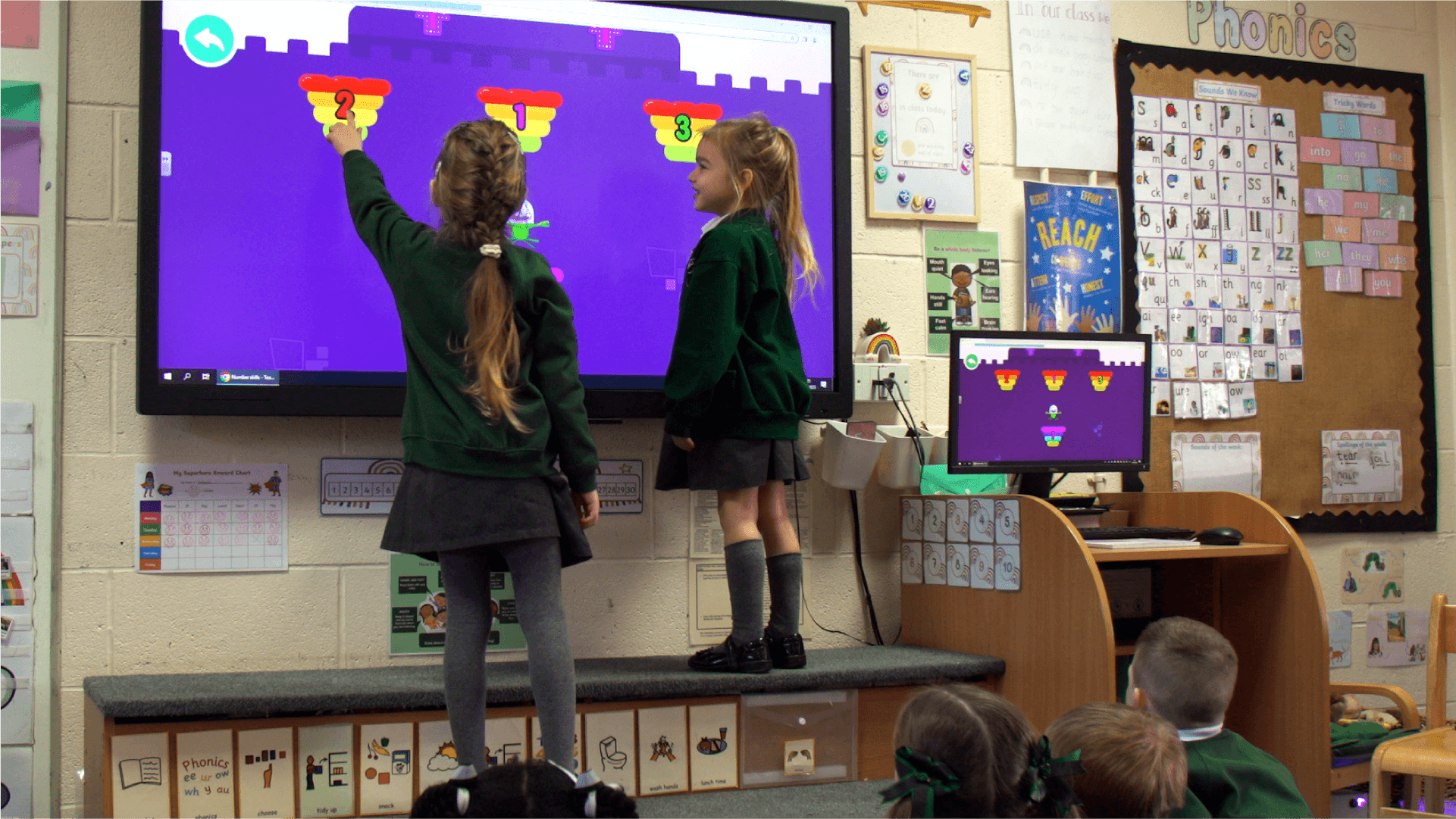
Through experience, feedback and our own research, we believe that purposeful screen-time, focused on fun, educationally exceptional games, can bring impactful results. Therefore, it’s reassuring when we find science that agrees with us.
A recent analysis of various studies has suggested that using math software can really improve math skills, especially with struggling students. Emma Brunskill, associate professor of computer science at Stanford University, found that students who use math programs more “saw a small but notable gain on external test scores”* when computer-assisted learning (CAL) is used in the classroom.
This result was especially strong when using programs that are built around “mastery learning”. Mastery learning is often defined by the conditions that students are able to progress at their own pace, only advancing once they have demonstrated understanding.
Teaching mastery is one of our major goals at Teach Your Monster, across all our games. We strive to meet this pedagogical standard to ensure we can create the greatest impact on kids and their learning. As we develop our games, we constantly improve as we get feedback from our experts, our teachers and kids to ensure that they are gaining that all-important understanding of the foundations of number sense.
In Number Skills, each mini game has been built with mastery in mind, ensuring that kids receive gentle feedback alongside ‘covert’ progression markers in-game. One of our game developers, Matt Sayers, tells us:
“For each mini game, there are defined chunks of level data that are handcrafted, intentionally designed levels, made in conjunction with our educational expert.”
These levels are marked by the star progress bar you see next to each ride in the Number Skills park.
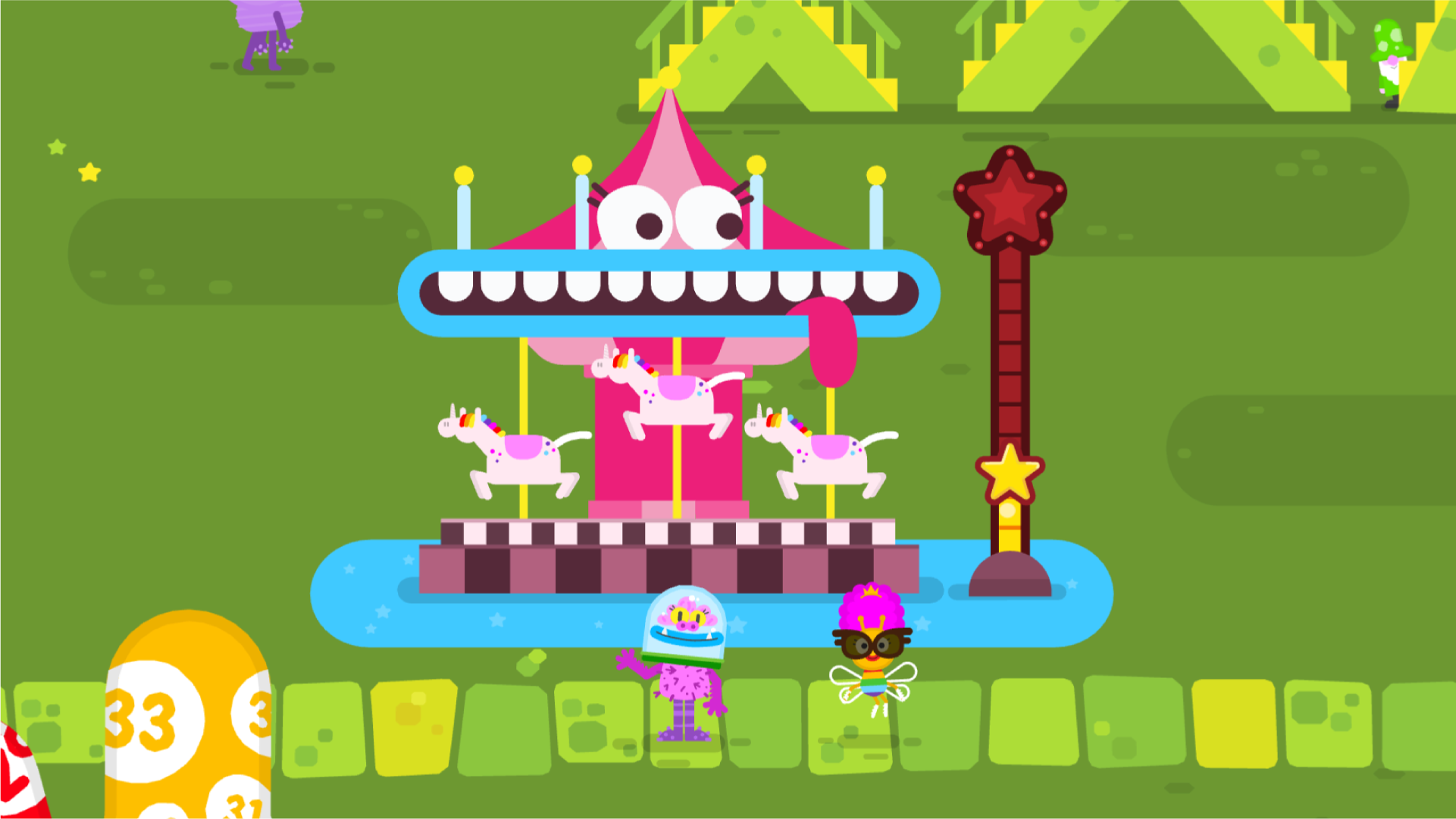
While playing the minigames, players need to answer with a certain percentage of accuracy to move up to the next level, indicated by the star bar filling up. But the game is designed to consistently engage learners, and so, even if they don’t reach this level of accuracy, players are never kept on a game where they are struggling.
“You could proceed up through the same park, even if you were struggling with one particular mini game, you could play the other mini games more often, and you would win the things that enabled you to build the bridge, to get to the next part of the theme park, and play the next set of games”
This means that children can play repetitively, reinforcing the skills that they need more help with, and the game moves them on when they have demonstrated they know the skill enough.
There are a lot of different mathematics software out there, and from this research, by using the right ones, teachers might reduce achievement gaps and boost overall gains by encouraging more productive use of the platform (focused on skill mastery)—especially among struggling students. We can’t really speak for other games, but we think Number Skills is pretty great for building those foundations of number sense for primary-age children.
But don’t just take our word for it. Over to teacher Susan Honsinger, Teacher, from Saint Mary School, Florida…
“My Grade 1 students were engaged even though they were playing the basic subitizing levels. They need the practice even if they might not know it!…. Love that the subitizing is continuous and the gradual progression. Simple, calm and clear guidance.”
*Original Study: Taryn Eames, Emma Brunskill, Bogdan Yamkovenko, and Philip Oreopoulos

Leo Allen
Product Lead